
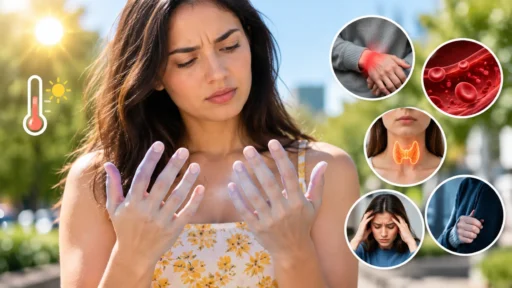


“If you are constantly wondering why are my hands always cold, even when the weather outside is warm, you are definitely not alone. Many people experience chilly fingers due to normal body temperature regulation, but understanding the root causes can help you figure out when it is harmless and when to seek medical advice.”
Quick answer: cold hands in warm weather are most often caused by poor circulation and not a serious problem. The body prioritizes the distribution of warm blood to the heart, lungs and other organs, and the arms and legs are the last to receive it. However, if this condition occurs frequently enough, there are several common causes that are usually worth considering – and some simple solutions that can help now.
Why Do My Hands Feel Cold When It’s Not Cold Outside?
Your hands and feet are the “end of the line” for your blood supply. When your body needs to protect its core of heart, lungs, and other vital organs, it has a handy way of doing so: it causes the small blood vessels in the fingers and toes to narrow. That’s a good thing; technically, it’s called vasoconstriction. But for some people, their bodies may seem to have a faulty “check valve” that causes it to happen too easily or too often.
Cold hands on their own aren’t usually a worry. It’s the frequency, the duration, and any accompanying symptoms that are worrying.
Why Are My Hands Always Cold? Common Causes Explained
Here are the most common reasons your hands might feel cold, even in a warm room.
1. Poor Blood Circulation
This is the most common and usually the most simple cause. Sitting for too long, not using the hands much, low blood pressure, or a slight dehydration can reduce the blood flow to the fingers. Standing and moving around for a few minutes is usually enough.
2. Raynaud’s Phenomenon
Raynaud’s is a very common phenomenon that involves the constriction of small blood vessels in the fingers. This leads to the affected person’s fingers turning white and then blue when exposed to cold or stress, and subsequently returning to normal color when blood circulation resumes. Raynaud’s affects women much more often than men, and it usually begins in one’s adolescence or young adulthood. Its effects are generally mild, and it rarely has serious implications, but a physician should still be consulted in order to rule out other potential conditions.
3. Low Iron (Anaemia)
When your blood doesn’t carry enough oxygen around your body, your hands and feet are often the first place you notice it. Alongside cold hands, you might feel tired, short of breath, or look a bit pale. A simple blood test from your doctor can confirm this.
4. An Underactive Thyroid
Your thyroid gland is responsible for your body’s energy production and utilization, including body heat generation. Thus, when it is underactive, the entire body tends to be underactive as well, hence making everyone cold, not just the hands. Other symptoms of an underactive thyroid gland may include fatigue, weight gain, or dry skin.
5. Stress and Anxiety
When you’re stressed, your body releases adrenaline, which narrows blood vessels in your hands and feet to send more blood to your muscles — the classic “fight or flight” response. This is why your hands can go cold and clammy right before a big meeting or exam, even on a warm day.
6. Smoking and Caffeine
Nicotine and too much caffeine both narrow your blood vessels. If you smoke or drink a lot of coffee and notice your hands are often cold, this could well be a factor. Cutting back tends to make a noticeable difference within a few weeks.
7. Certain Medicines
Some blood pressure medicines, specifically beta-blockers, have as a side effect a decrease in heart rate and reduction of blood flow to the extremities such as the hands. If cold hands started after beginning a new medication, mention it to your doctor and don’t stop taking it without consulting him or her.
When Should You See a Doctor?
Most of the time, cold hands are harmless. But book an appointment if you notice any of the following:
- Only one hand is cold, not both
- Your fingers change colour (white, blue or dark red)
- You have numbness, pain or sores on your fingers
- Cold hands come with tiredness, hair loss or unexplained weight changes
- Symptoms start suddenly after age 30 and keep getting worse
These can sometimes point to something that needs proper treatment, so it’s always better to get checked rather than guess.
Simple Ways to Warm Up Your Hands Fast
Run your hands under warm (but not hot) water for a minute or two
Make a fist and open it out slowly, 10 times, to help move the blood along
Tuck your hands under your armpits to warm them up quickly and gently
Swing your arms in a big circle to get the blood flowing round your fingers
Keep a pair of gloves or fingerless mittens handy (even indoors) if you’re working in an air-conditioned building
Limit your intake of caffeine and, if you smoke, cut down if at all possible (your GP can help with both)
Stay hydrated and don’t sit down for too long without taking a short walk
None of these require any special equipment and most offer almost instant results
Quick Answers
Are cold hands a sign of a heart problem?
Rarely. Cold hands alone are usually about blood flow, not your heart. See a doctor if cold hands come with chest pain, breathlessness or swelling.
Can anxiety really make your hands cold?
Yes. Stress hormones narrow the blood vessels in your hands as part of your body’s natural stress response.
Is it normal for hands to be cold but feet warm, or the other way round?
Yes, this is common and usually just means blood flow varies slightly between your hands and feet. It’s only worth checking if one side is always much colder than the other.
Does drinking more water help with cold hands?
It can. Mild dehydration can reduce blood volume and circulation, so staying hydrated is a simple, free first step.
Will cold hands go away on their own?
Often, yes, especially if it’s linked to stress, caffeine or sitting still. If it’s constant or getting worse, it’s worth asking a doctor to rule out an underlying cause.
The Bottom Line
Cold hands in warm weather are normally a sign that your body is trying to keep its core warm, rather than a symptom of something more serious. In most cases, exercising, quitting smoking and limiting caffeine intake and keeping warm and exercising should help. If your hands change color or feel numb, or the coldness is accompanied by other symptoms, you should consult a medical professional to rule out other causes.