
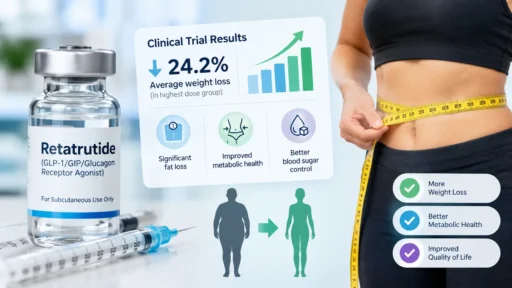


Quick Answer: Retatrutide is an experimental weekly injection that targets three gut hormones at once (GIP, GLP-1, and glucagon) instead of just one or two like older drugs. In 2026 Phase 3 trials, people with obesity lost up to 30% of their body weight over two years. It remains investigational, but if approved, it could become the first triple hormone receptor agonist available for obesity treatment. It is not yet FDA-approved and is not available by prescription.
What Is Retatrutide?
Retatrutide is a once-weekly injectable medicine developed by Eli Lilly. It works as a single-molecule agonist of three different receptors: glucose-dependent insulinotropic polypeptide (GIP), glucagon-like peptide-1 (GLP-1), and glucagon. Think of it as a “triple-action” tool. Older weight-loss shots, like semaglutide, hit one target. Newer ones, like tirzepatide, hit two. Retatrutide hits three, which researchers believe is why its results stand out so much in early testing.
It’s also known in medical papers by its code name, LY3437943, but “retatrutide” is the name you’ll see most in news and health articles.
How the Clinical Trials Are Set Up
Retatrutide’s testing program is run under two umbrella names: the TRIUMPH trials (focused on obesity, diabetes, and heart disease) and the TRANSCEND trials (focused on type 2 diabetes). Several of these studies have now reported real results, not just early predictions.
- TRIUMPH-1 — tested retatrutide in adults with obesity or overweight who did not have diabetes. This was an 80-week trial of about 2,339 people, randomly given doses of 4mg, 9mg, or 12mg, or a placebo.
- TRIUMPH-2 — tested the drug in people who had both obesity and type 2 diabetes.
- TRIUMPH-3 — looked at adults with a high BMI who also had existing heart disease. This trial randomly assigned 1,949 adults with a body mass index of at least 35 and established cardiovascular disease to one of two retatrutide doses or a placebo.
- TRIUMPH-4 — studied people who had obesity along with knee osteoarthritis.
- TRANSCEND-T2D-1 — focused specifically on people managing type 2 diabetes.
Running several trials across different health conditions helps researchers understand not just whether the drug works, but who it works best for, and whether it’s safe for people with other health issues at the same time.
The Headline Numbers
This is the part most people want to know: how much weight did participants actually lose?
- TRIUMPH-1: participants with severe obesity who took the 9mg or 12mg dose lost up to 30% of their body weight by the two-year mark.
- TRIUMPH-3: average weight loss reached about 22.6% of body weight, or roughly 55.8 pounds, over 80 weeks, in people with obesity and heart disease.
- TRIUMPH-4: participants with obesity and knee osteoarthritis who took the 12mg dose lost an average of 28.7% of their body weight at 68 weeks.
- TRANSCEND-T2D-1: participants with type 2 diabetes on the 12mg dose lost an average of 16.8% of their body weight at 40 weeks.
Why is the number for diabetes lower than all the rest? This trend is typical of most weight-loss medications. People with type 2 diabetes generally experience a lesser percentage of weight reduction on the same drug, possibly due to differences in their metabolic processes and insulin resistance. It does not mean that the medication is ineffective for them; it only shows varying degrees of response.
The medical professionals have had some concerns about the results. One weight loss executive even called the findings “genuinely striking” and said that a 30% reduction in weight is a goal typically associated with bariatric surgery. Another professional stated that the results “set a new benchmark for the field.”
What About Heart Health and Safety?
Weight loss is not the only outcome that researchers are interested in. Since the new drug should not be unsafe for the patient’s heart, scientists are also studying the occurrence of cardiovascular events.
In the cardiovascular safety analysis, there were 27 major adverse cardiovascular events in the retatrutide group and 23 such events in the placebo group. Thus, the trial’s results suggest that the incidence of these events is different between the treatment and the control group, and this fact requires further investigations.
On the other hand, there are positive results of clinical trials for the new drug. Besides reducing the patients’ weight, retatrutide decreased the level of several cardiometabolic risk factors, such as triglycerides, non-HDL cholesterol, systolic blood pressure, waist circumference, and high-sensitivity C-reactive protein.
The most common side effects of the new drug are consistent with those of other GLP-1 medications and include nausea, gastrointestinal discomfort, and dyspepsia during the dose escalation. On the other hand, the results of the 2026 trial update revealed one rare side effect of the medication. According to the trial, some patients experienced dysesthesia – abnormal tactile sensations, which is a strange tingling or feeling of numbness on the skin.
Is Retatrutide FDA-Approved Yet?
No, retatrutide is still investigational, and it is not available anywhere on the market. Nevertheless, very positive trial outcome data have accelerated the development of this drug as treatment for obesity. Based on the positive results of the TRIUMPH program, Lilly has initiated the necessary regulatory steps to submit for FDA approval in early 2027, making it potentially the first triple hormone receptor agonist to be approved for the treatment of obesity.
Lilly is also planning to submit for regulatory approvals of retatrutide for treatment of obesity due to knee osteoarthritis pain and obesity associated with obstructive sleep apnea based on the Phase 3 program data.
How Does It Compare to Other Weight-Loss Drugs?
It’s tempting to line up retatrutide’s numbers next to Wegovy or Zepbound and declare a winner, but experts caution against this. Results come from separate clinical trials and should not be compared directly, because each study used different participants, designs, and follow-up periods. The extra glucagon target is the mechanism Lilly points to for the stronger results, but that specific difference hasn’t yet been tested head-to-head against tirzepatide in a controlled trial. A true side-by-side study is really the only fair way to settle that question.
Frequently Asked Questions
Can I take retatrutide right now?
No. It’s only available through enrollment in an approved clinical trial, not through a regular prescription.
When might retatrutide be approved?
A submission to the FDA is expected in early 2027, so approval, if granted, would likely follow sometime after that.
What are the most common side effects?
Nausea, digestive upset, and occasional skin sensitivity issues (dysesthesia) have been reported most often.
Does retatrutide help with anything besides weight loss?
Yes. Trials show improvements in cholesterol, blood pressure, waist size, and inflammation markers, and Lilly is also pursuing approval for knee osteoarthritis pain and sleep apnea linked to obesity.
Is retatrutide safe for the heart?
Early cardiovascular data looks encouraging overall, but researchers are still closely monitoring heart-related events as more trial data is published.
Sources & Further Reading
Pharmaceutical Journal — Phase III retatrutide study demonstrates 30% weight loss
HCPLive — Retatrutide Meets Phase 3 Weight-Loss Endpoints in 2 Obesity Trials
AJMC — Retatrutide Achieves Up to 30.3% Average Weight Loss in Phase 3 TRIUMPH-1 Trial