
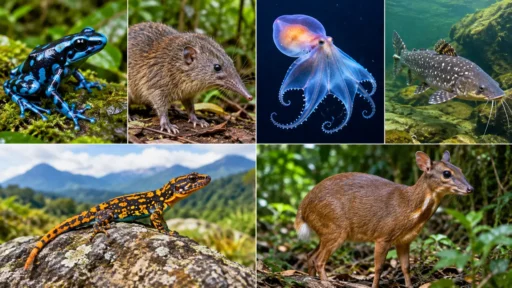
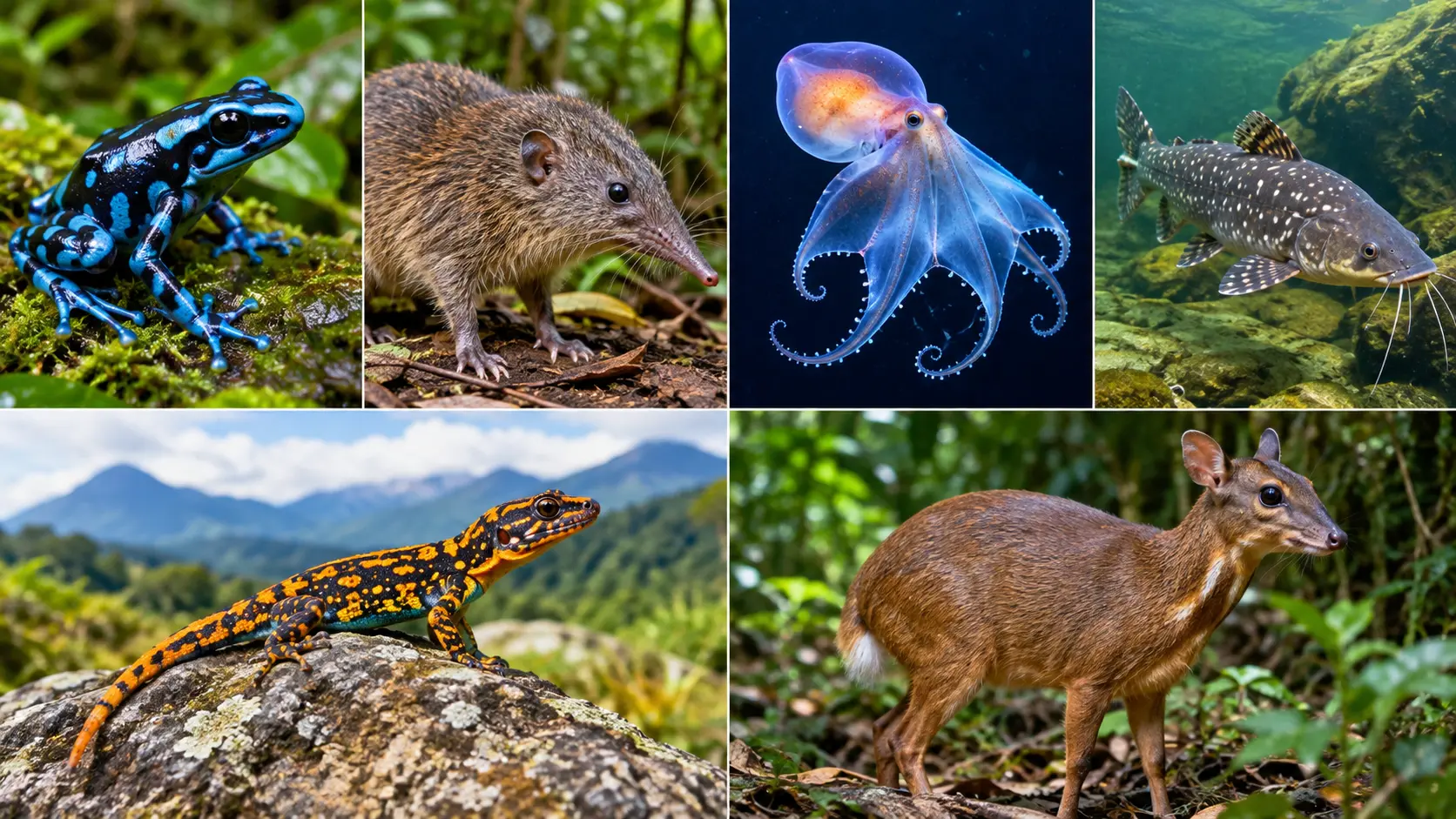

| Quick Answer Scientists describe thousands of new animal species every year, and recent standout discoveries include a giant “Darth Vader” sea bug near Vietnam, a mouse opossum in the Peruvian Andes, a devil ray off Brazil, a second species of giant hummingbird in the Andes, a Himalayan happy-face spider, deep-sea creatures off Western Australia, and a new beetle in Madagascar. Scientists believe only around 10% of life on Earth has been catalogued so far. |
Every year, researchers uncover incredible newly discovered animal species in some of the most remote and unexplored habitats on the planet. From deep-sea ocean trenches to high-altitude mountain forests, these fascinating creatures continue to surprise scientists and expand our understanding of Earth’s rich biodiversity.
You would think that after hundreds of years of exploring, we would have found all the animals here on Earth by now. Well, we have not. Scientists say that only 10 percent of marine life has been identified, meaning that there could be one to two million unidentified species living in the ocean alone. That does not include any of the animals that live on land, either.
Every year, scientists identify hundreds of new animals and organisms that have never been seen before. Some of them are small and easy to miss. Others are fairly big and just had not been explored in certain areas. Here are seven new animals that have been discovered recently. Use this list to narrow down where you would like to search for animal life.
1. The Darth Vader Sea Bug (Bathynomus vaderi) — South China Sea, Vietnam
This one made headlines. Bathynomus vaderi is a giant isopod — a type of crustacean distantly related to the little pill bugs you might find rolling around under a garden rock. It can grow to be more than 32 centimeters long and weigh more than a kilogram. Scientists named it after Darth Vader, the evil empire CEO, because its head resembles his helmet.
Scientists found the creature in the catch of Vietnamese fishermen who were trawling the waters around the Spratly Islands. The isopods were already a delicacy in the region, fetching a high price on restaurant menus before they realized what they were. A good reminder that new species can be found in the most unexpected places — even on your dinner plate.
2. The Chachapoya Mouse Opossum (Marmosa chachapoya) — Andes Mountains, Peru
While searching for a completely different animal — a rare squirrel — researchers in Peru’s Río Abiseo National Park stumbled onto something better: a small, previously unknown marsupial living in the high-altitude cloud forests of the eastern Andes. DNA testing confirmed it was a genuinely new species of mouse opossum.
The steep, densely forested mountains of eastern Peru are notoriously hard to explore, which is exactly why they still hold secrets like this one. Scientists believe many more undiscovered animals are likely hiding in these same slopes.
3. Mobula Yarae — Off the Coast of Brazil
Rays are not exactly diminutive creatures, making it all the more astonishing that a new species of devil ray was swimming up and down the coast of Brazil, unnoticed by scientists until now. Dubbed Mobula yarae, the leviathan is one of the largest recent beasts to have been discovered, and serves as a stark reminder that the biggest things are not always obvious to observers. One simply needs only to look hard enough, and study the subtle differences between the creature in question and its close relatives in order to properly distinguish it.
4. The Northern Giant Hummingbird (Patagona chaski) — High Andes, Ecuador and Peru
Sometimes a new species has been right there all along. For example, scientists have long classified a large hummingbird common around western South America as a single species, but now researchers have discovered that there are two kinds of large hummingbirds. They put tiny backpacks on the birds backs and were surprised to find that some large hummingbirds live in high altitudes of the Andes year round and others migrate down to the coast and return after a few months.
It turns out that the two populations of large hummingbirds have been evolving independently for about three million years. The non-migratory kind was named the Northern Great Hummingbird, and is found in the Andes of Ecuador and Peru. Its the largest hummingbird on the planet. Scientists have been calling it a single species for a long time, but it was actually two species masquerading as one.
5. The Himalayan Happy-Face Spider — Himalayan Mountains
Hawaii’s happy-face spider is known for the happy face painting on its back, but it seems to have an identical cousin on the other side of the world. A recently discovered happy-face spider from the Himalayas is strikingly similar to its Hawaiian namesake, despite the fact that DNA evidence suggests the two spiders evolved independently from one another, thousands of miles away.
The case is an example of convergent evolution, where unrelated organisms independently evolve similar traits as a result of having to solve the same problems.
6. Deep-Sea Discoveries off Western Australia
In 2026, scientists exploring deep underwater canyons off the coast of Western Australia came across an entire hidden ecosystem, including crustaceans, sea anemones, sponges, octopuses, sharks, and more swimming through a previously undiscovered reef. In addition to this, they found a whale fall – the bones of a whale on the ocean floor that had become a thriving mini ecosystem for dozens of deep-sea species to call home, with signs of an even more elusive giant squid in the area.
These types of deep canyons are among the most unexplored places on Earth due to the danger and difficulty of studying them.
7. Macratria durrelli — Madagascar
Not every new species is a mammal or a sea monster — many are tiny insects that play a big role in their ecosystems. Macratria durrelli is a newly described beetle found in Madagascar, named after British naturalist Gerald Durrell in honour of his decades of conservation work on the island. It belongs to a huge group of “antlike flower beetles” found on every continent except Antarctica.
Madagascar remains one of the richest biodiversity hotspots on Earth, and new insects like this one are described there almost every year.
Why So Many New Species Keep Turning Up
It’s not that there’s a sudden explosion of new species, per se: it’s just that we can find them in new ways. The ability to perform DNA testing means that two creatures that look identical can actually be different species (like the giant hummingbird). Our new technology, like submersibles and drones, allow us to explore parts of the world that were previously inaccessible. Old specimens in museums, even if they’d been there for thirty or forty years, can be re-examined and identified as new species.
Unfortunately, many of these discoveries are made on species that are already critically endangered, and that’s part of why it’s so important to continue discovering and naming new animals. As many conservationists will tell you, it’s impossible to protect what you don’t know is there.
Frequently Asked Questions
How many new animal species are discovered each year?
Scientists typically describe several hundred to over a thousand new species each year across all groups of life, including animals, plants, and fungi.
What percentage of animal species on Earth have been discovered?
Researchers estimate that only around 10% of species living in the ocean have been identified so far, meaning millions of marine species may still be undiscovered.
Are newly discovered species always tiny or rare?
No. While many are small insects or deep-sea creatures, some recent discoveries — like the devil ray off Brazil or the Northern Giant Hummingbird — are large, well-known types of animals hiding in plain sight.
Why are so many new species found in the deep sea?
The deep sea remains largely unexplored because it’s difficult, expensive, and technically demanding to reach. New submersible and drone technology is now making deep-sea exploration far more common.
Do newly discovered species need protecting straight away?
Often, yes. Many new species are already classified as threatened as soon as they’re described, usually because their habitat is small or already under pressure from human activity.