


Quick Answer
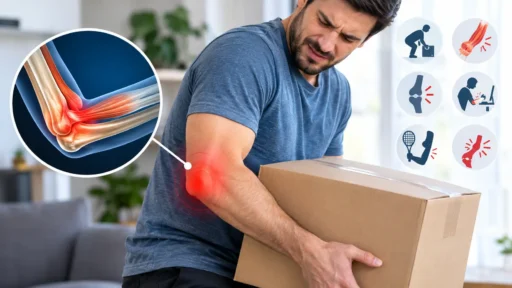
Elbow pain when lifting is usually down to an overworked tendon, not a serious injury. The most common culprits are tennis elbow (outside of the joint) and golfer’s elbow (inside of the joint). Rest, ice, and lighter lifting sort out most cases within a few weeks. See a doctor if the pain is severe, doesn’t improve, or comes with swelling or numbness.
What’s Really Going On in Your Elbow When You Lift
You should be aware that your elbow isn’t simply a hinge. It’s a meeting point of forearm muscles that are linked to their associated tendons, which in turn are connected to specific bones. You use these structures every moment you’re gripping an object, such as when you’re holding a bag of groceries, curling a dumbbell in the gym or even carrying a box.
It’s perfectly normal for your tendons to suffer small tears or become inflamed during the repeated lifting of relatively heavy objects or during particularly strenuous physical activity. During the healing process, there could be pain on the outside, inside or at the front of your elbow. Don’t worry – most of the time, the cause of the discomfort can be easily diagnosed and effectively treated without having to resort to surgery.
Common Causes of Elbow Pain When Lifting
Here’s a simple guide to where the pain sits and what it usually means.
| Where it hurts | Likely cause | What it feels like |
| Outside of elbow | Tennis elbow | Ache that gets worse when gripping or lifting |
| Inside of elbow | Golfer’s elbow | Soreness when bending the wrist or carrying bags |
| Front of elbow | Biceps tendonitis | Deep ache when curling or lifting with palm up |
| Back of elbow | Triceps tendonitis | Pain when pushing or straightening the arm |
| Whole joint, stiff | Arthritis | Stiffness and swelling, worse in the morning |
1. Tennis Elbow (Lateral Epicondylitis)
This is the most common reason for elbow pain, and you don’t need to play tennis to get it. It happens when the tendons on the outside of your elbow become irritated from repeated gripping, lifting, or twisting. Painters, cleaners, gardeners, and gym-goers get it just as often as tennis players.
2. Golfer’s Elbow (Medial Epicondylitis)
This is tennis elbow’s twin, just on the inside of the elbow. It’s common among people who carry heavy bags, do a lot of bicep curls, or work with tools that need a firm grip.
3. Biceps or Triceps Tendonitis
If the pain sits at the front of your elbow, it could be your biceps tendon complaining, often from curling or lifting with your palm facing up. Pain at the back, especially when pushing or straightening your arm, points to the triceps tendon instead.
4. A Pinched or Irritated Nerve
Sometimes it’s not a tendon at all. The ulnar nerve runs close to the elbow and can get squashed or irritated by repeated bending. This often comes with tingling or numbness in your ring and little fingers, not just plain pain.
5. Arthritis
Less common in younger people, but wear-and-tear or inflammatory arthritis can make the whole joint stiff and sore, especially first thing in the morning or after rest.
When Should You See a Doctor?
Most elbow pain from lifting isn’t an emergency, but get it checked if you notice any of the following:
- Pain that hasn’t improved after two to three weeks of rest
- Obvious swelling, bruising, or a visibly out-of-shape elbow
- You can’t fully bend or straighten your arm
- Numbness or tingling in your hand or fingers
- Pain that started suddenly after a fall or direct knock
A GP or physiotherapist can usually tell what’s going on with a simple physical check, no scan needed in most cases.
How to Treat Elbow Pain at Home
For mild to moderate cases, these simple steps work well for most people:
Rest the arm. Avoid using the joint that causes the discomfort as much as possible, but try to move it gently.
Apply an ice pack to the affected area. Ice should be applied several times a day, for 15 to 20 minutes at a time, for the first 2 or 3 days after the injury occurs.
Try to compress the area. An elbow brace, used to relieve pressure on the tendon, can be worn around the elbow below the bend of the arm.
Consider using over-the counter medication. Pain-relieving creams and pills may help reduce inflammation, if they are right for you.
Try to stretch the joint. Once the pain begins to subside, gentle stretching of the wrist and forearm may help.
Be patient. It can take up to 2 or 3 weeks for the tendon to heal.
How to Stop It Coming Back
Once your elbow feels better, a few small habits keep it that way:
- Warm up your forearms before lifting anything heavy.
- Keep your wrist straight, not bent, when gripping or carrying.
- Build up weight gradually instead of jumping to heavier loads.
- Switch up your grip and tasks so the same tendons aren’t always doing the work.
- Strengthen your forearms with light, regular exercises, not just occasional heavy lifts.
Frequently Asked Questions
Why does my elbow hurt only when I lift something heavy?
Heavy lifting puts extra strain on tendons that are already a little worn or inflamed. Light tasks don’t bother them, but the extra load does, which is a classic sign of tendonitis such as tennis or golfer’s elbow.
Can elbow pain from lifting go away on its own?
Often, yes. Mild cases settle down in a few weeks with rest, ice, and lighter activity. If it lasts longer than two to three weeks, it’s worth getting checked.
Is it OK to keep working out with elbow pain?
Light, pain-free movement is usually fine, but pushing through sharp pain can turn a mild strain into a long-term problem. Swap heavy lifts for lighter ones until it settles.
What’s the difference between tennis elbow and golfer’s elbow?
Tennis elbow causes pain on the outside of the elbow, while golfer’s elbow causes pain on the inside. Both come from overused tendons, just on opposite sides of the joint.
When should I worry about elbow pain?
See a doctor if you have severe pain, obvious swelling, a visibly deformed elbow, or you can’t bend or straighten your arm. These can point to a tear, fracture, or infection.
Helpful Resources
Mayo Clinic — Tennis Elbow Overview