
Quick Answer
AI shopping bots are changing online shopping by replacing manual browsing and filtering with conversation. Instead of scrolling through pages of results, shoppers describe what they need in plain language, and the bot compares prices, reads reviews, and suggests products that match. Surveys from early 2026 put adoption between 30% and 51% of US online shoppers, and Amazon reports a 3,300% jump in traffic from AI shopping assistants during Prime Day 2025. Shoppers still handle the final decision themselves in most cases, but AI now owns much of the research phase.
What Exactly Is an AI Shopping Bot?
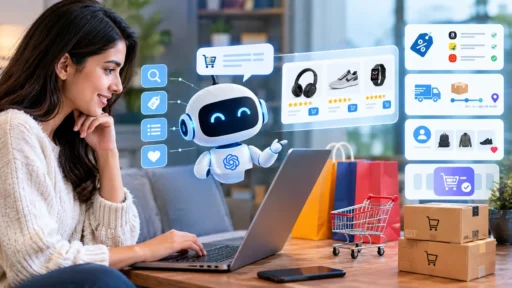
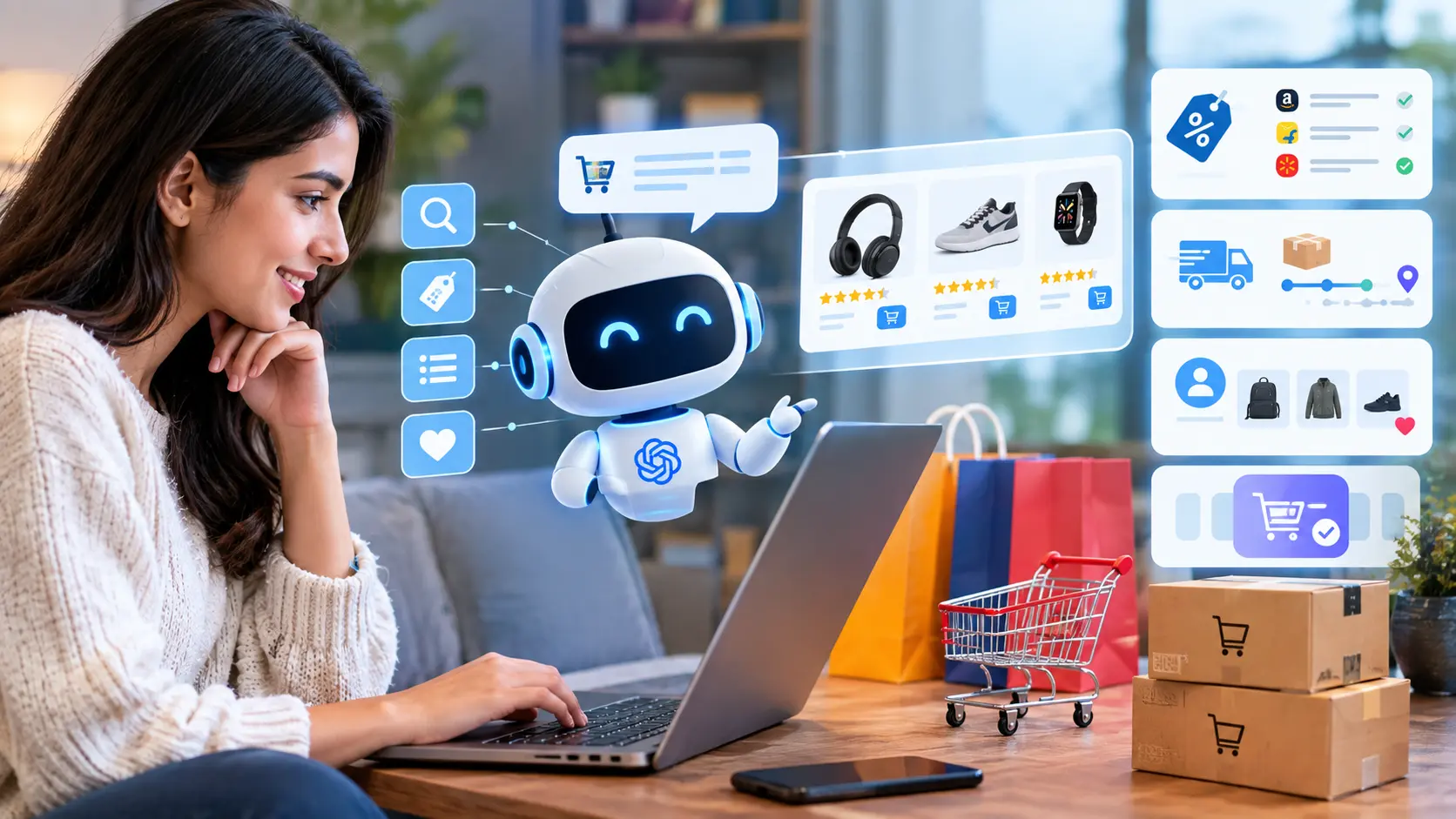
An AI shopping bot is software that talks to you like a person, understands what you’re trying to buy, and does the legwork of comparing options. Some live inside a retailer’s website as a chat widget. Others are general-purpose assistants like ChatGPT, Gemini, or Perplexity that shoppers bring into their own research. A newer category, often called an “agent,” goes a step further and can actually complete a purchase on your behalf once you give it permission.
The difference from a basic search bar is context. Type “running shoes” into Amazon and you get thousands of results sorted by relevance and sponsorship. Tell a shopping bot “I need trail running shoes for flat feet, budget under £80,” and it filters out everything that doesn’t fit before showing you a shortlist.
Why Shoppers Are Switching to Bots
They save time on comparison shopping
Comparing five browser tabs, three review sites, and a spreadsheet used to be normal for a big purchase. A bot collapses that into one conversation. Research from Adobe found that 1 in 4 customers already treat AI platforms as their first stop for product research, ahead of brand websites and online reviews.
They convert doubt into a decision faster
Retailers that added AI shopping assistants to their sites report meaningfully higher conversion during sessions where the customer engages with the bot compared with sessions where they don’t. That’s not because the bot is persuasive. It’s because it removes the friction of not knowing which of ten similar products to pick.
They meet people where they already are
Shoppers no longer need to be on a website to start a shopping conversation. Bots now show up in SMS threads, Instagram DMs, email, and voice assistants like Alexa. A text message about an abandoned cart gets read far more reliably than a marketing email, simply because people check texts almost immediately.
The Trust Gap Nobody’s Fixed Yet
Adoption numbers look impressive, but trust hasn’t caught up at the same pace. One widely cited 2026 study found that more than half of consumers still distrust shopping agents, even while using them. The main hesitations are familiar: people trust sources they already know, and they worry a bot might steer them toward whatever earns the retailer the most money rather than what actually suits them.
This gap explains an interesting pattern in the data. Shoppers are happy to let AI research, compare, and shortlist. Far fewer are willing to let it click “buy” without a final check from a human. Roughly three in ten shoppers say they’d let AI make the actual purchase decision for something routine, like household supplies. For anything with real cost or consequence, most people still want the last word.
How Retailers Are Responding
Retailers aren’t waiting for the trust gap to close on its own. Many are building their product pages and descriptions so that AI bots can read and recommend them accurately, a practice sometimes called AI search optimisation. Clear specifications, honest reviews, and structured data all help a bot describe a product correctly instead of guessing.
Some brands have gone further and built their own branded assistants that only recommend their own catalogue. Others have opened their product data to general-purpose AI tools, betting that visibility inside ChatGPT or Gemini answers matters as much as visibility on a Google results page used to.
What This Means for You as a Shopper
- Use a bot for research, not blind trust. Ask it to compare options and explain its reasoning, then verify anything that sounds too good.
- Be specific. The more detail you give (budget, size, use case), the better the shortlist.
- Check where the recommendation comes from. A bot tied to one retailer will only ever show you that retailer’s stock.
- Keep an eye on your data. Shopping bots often remember your preferences across sessions, which is convenient, but worth knowing before you share sensitive details.
The Road Ahead
Agentic commerce, where an AI doesn’t just recommend a product but completes the purchase, is still early. Around a third of US consumers say they’d be open to letting AI handle buying on their behalf, and that number is climbing each year as trust and track record build up. Whether that turns into everyday reality or stays a niche habit depends less on the technology and more on whether bots can prove, purchase after purchase, that they’re actually looking out for the shopper.
FAQ
Do AI shopping bots actually save money, or just time?
Mostly time. A bot narrows choices fast, but it doesn’t always surface the cheapest option unless you specifically ask it to sort by price, since some bots prioritise relevance or sponsored listings over cost.
Are AI shopping assistants safe to use with my payment details?
Reputable retailer bots use the same secure checkout as the rest of the site. The bigger risk is sharing personal preferences or payment info with a third-party assistant that isn’t clearly linked to the retailer, so stick to verified tools.
Can AI shopping bots complete a purchase without asking me first?
Only if you’ve explicitly set them up to, usually through an “agentic” feature with spending limits you control. Most bots today stop at recommending and leave the final click to you.
Which retailers use AI shopping bots the most?
Large platforms with heavy catalogue volume, like Amazon, have invested the most, and Amazon reports a large share of its revenue now ties back to AI-driven recommendations. Smaller retailers are catching up through chat widgets and SMS-based assistants.
Will AI shopping bots replace search engines for product research?
Not entirely, but they’re taking a growing share. Around half of retailers surveyed in 2026 expect AI tools to replace traditional search for product discovery within a few years, though search still matters for browsing without a specific goal in mind.
How do I make sure a bot gives me accurate product recommendations?
Be as specific as possible about your needs and budget, ask the bot to explain why it picked something, and cross-check any claim about price or availability directly on the retailer’s page before buying.