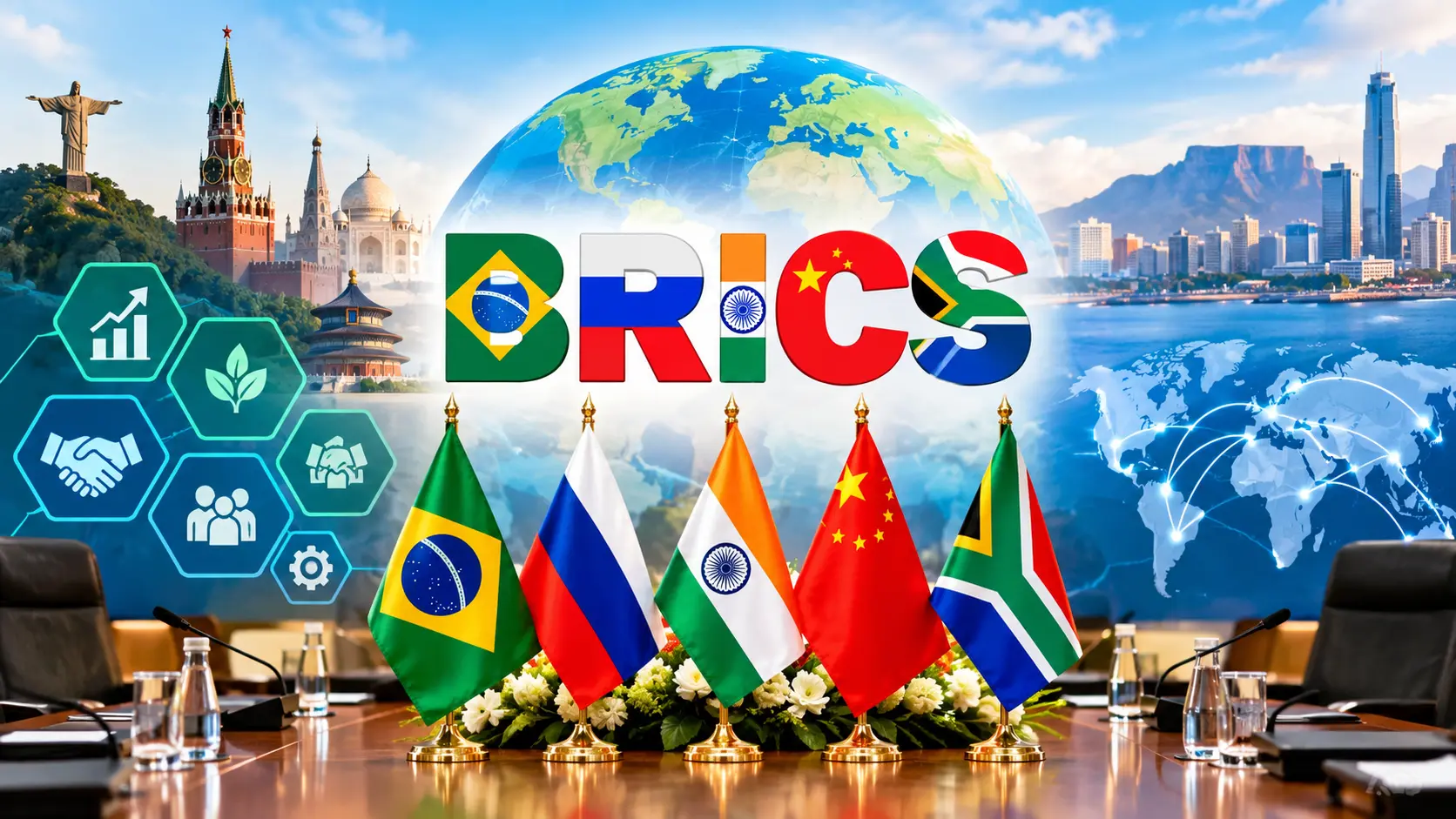

| Quick Answer The 2026 BRICS Summit, held in New Delhi on 12-13 September, ended with leaders signing the New Delhi Declaration by full agreement. The bloc agreed on five main things: fighting terrorism together, solving conflicts through talks rather than force, strengthening trade and supply chains, working together on satellites, and pushing for reform of the United Nations. Leaders did not launch a shared currency to replace the US dollar, choosing instead to keep reducing dollar reliance step by step. |
If you read the news about world leaders holding talks in India this week, and you’re trying to understand what is going on, then this guide is for you. The BRICS summit can be confusing, and this article explains it all in simple words. A list of major events of the meeting is presented, and their implications for the masses, corporations and the average Joe’s pocket.
What Is BRICS, in Plain Terms?
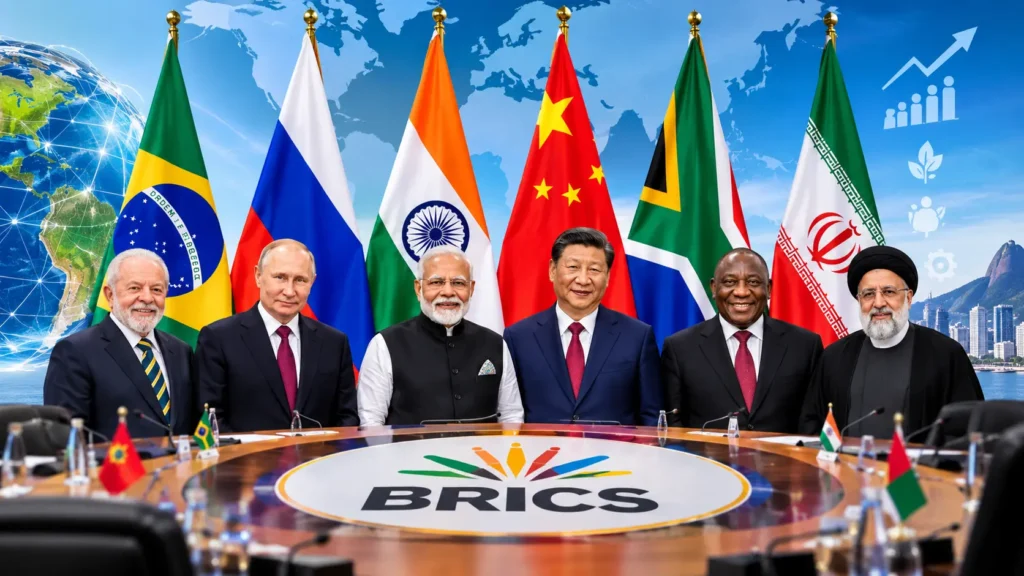
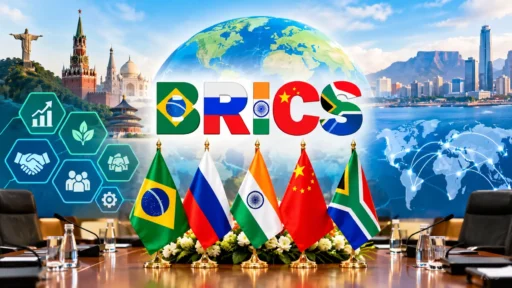
BRICS is a group of five major developing countries that have emerged as important global players: Brazil, Russia, India, China, and South Africa. This association has existed for the last two years and now counts eleven members, as recent additions Egypt, Ethiopia, Iran, Saudi Arabia, the UAE, and Indonesia joined the organization. Overall, the nations involved in BRICS represent a significant portion of global demographics and trade. This international coalition is intended to position developing countries as key players in the political, economic, and trading spheres, which have been dominated by the US, European nations, and organizations such as the World Bank and IMF.
2026 BRICS Summit Timeline
Here’s how the year actually played out, step by step:
| Date | What Happened |
| 10 February 2026 | First BRICS Sherpa Meeting held in New Delhi, opening India’s 2026 chairship under the theme “Building for Resilience, Innovation, Cooperation and Sustainability.” |
| Feb-Sept 2026 | Over 400 meetings and working sessions held across 30 Indian cities, covering trade, energy, health, and technology. |
| 12 September 2026 | Summit opens at Bharat Mandapam, New Delhi. Leaders reach full agreement on the New Delhi Declaration after overcoming Iran-UAE tensions. |
| 13 September 2026 | Final day: open plenary with partner countries. Talks wrap up on global governance, trade, and regional tensions. |
That two-day window is short, but the groundwork — those 400-plus meetings — is what actually shaped the final decisions.
The Big Decisions From New Delhi
Once the dust settled, five decisions stood out as the real substance of the summit:
1. A joint stance against terrorism. Member countries agreed to work more closely together on counter-terrorism, sharing information and coordinating responses.
2. Solving conflicts through talks, not force. The declaration called for international disputes to be settled through dialogue and diplomacy. It also criticised one-sided sanctions that skip United Nations approval.
3. Stronger trade and supply chains. Countries agreed to open markets further and build a BRICS Global Value Chains Action Plan running from 2026 to 2030, aimed at making trade between member countries smoother and less dependent on any single country.
4. Satellite cooperation. Leaders approved a BRICS Remote Sensing Satellite Constellation, a shared system that will help member countries track climate change, farming conditions, and natural disasters using satellite data.
5. Calling for UN reform. As they have for years, BRICS leaders again pushed for changes to the United Nations Security Council, arguing that developing countries deserve a bigger seat at the table.
Did BRICS Launch a Common Currency?
This, in my opinion, was one of the most asked questions since it seems that everyone was waiting to hear that a new BRICS currency has been created. However, the good news never came true as there was no such offer made at the summit. The US dollar is still a dominant currency comprising nearly 58% of the world’s currency reserves and about 80% of trade finance, according to some sources. Thus, it is impossible for the dollar to simply disappear overnight.
In reality, the process takes place at a much slower pace, and what we see now is just the beginning of a long evolution. The growing trend of buying goods and services in BRICS nations from each other with local money and new financial infrastructures that have been built to facilitate the process will contribute to the shift in the years to come.
What About the Middle East Tensions?
Getting all countries to agree on one joint declaration was not an easy task this year. Iran and the UAE, which have had strained relations with each other in recent years, have signed the same statement, which required considerable diplomatic work behind the scenes by India. The text of the declaration is concerned with preventing attacks on civilian objects and nuclear facilities and calls for de-escalation of the situation, without naming any specific country. This wording reflects a compromise between representatives of states that have entirely different positions on the situation in the Middle East.
Why This Matters for You
You might be wondering why a summit thousands of miles away should matter to someone reading this in the US or UK. Here’s the honest, practical answer:
- Trade and prices: As BRICS countries build stronger supply chains among themselves, it can shift where goods and raw materials flow, which eventually shows up in the price of everyday products.
- The dollar’s role: Even gradual moves away from dollar-based trade are worth watching if you invest, run a business that trades internationally, or simply follow the news on currency and inflation.
- Global politics: With 11 member countries now representing a large share of the world’s population, decisions made at BRICS summits increasingly shape debates at the UN, the WTO, and other bodies that do affect Western economies indirectly.
None of this changes your daily life overnight. But these summits are where longer-term shifts in global trade and politics start to take shape.
Key Takeaways
- The 18th BRICS Summit took place in New Delhi on 12-13 September 2026
- Leaders adopted the New Delhi Declaration by full agreement, despite Middle East tensions
- Five major decisions covered terrorism, conflict resolution, trade, satellites, and UN reform
- No common BRICS currency was launched; de-dollarisation remains a slow, gradual process
- The outcomes matter most for global trade patterns and currency trends over the coming years
Frequently Asked Questions
What is the New Delhi Declaration?
It’s the official joint statement adopted by all 11 BRICS member countries at the 2026 summit, covering trade, security, climate, and reform of global institutions.
Which countries are currently BRICS members?
As of the 2026 summit, BRICS has 11 full members: Brazil, Russia, India, China, South Africa, Egypt, Ethiopia, Iran, Saudi Arabia, the UAE, and Indonesia.
Did BRICS agree to drop the US dollar?
No. Leaders continued to encourage trade in local currencies, but there was no agreement to launch a shared BRICS currency or formally drop the dollar.
Where was the 2026 BRICS Summit held?
It was held at Bharat Mandapam in New Delhi, India, from 12 to 13 September 2026, under India’s BRICS chairship.
Who chairs BRICS after India in 2026?
China takes over as BRICS chair following India’s 2026 presidency.