
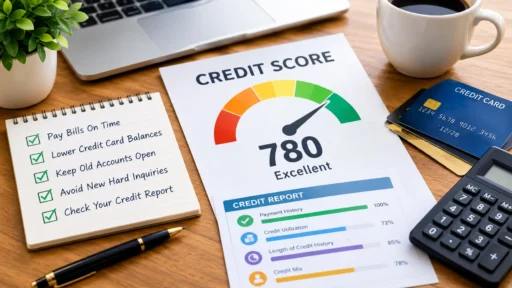
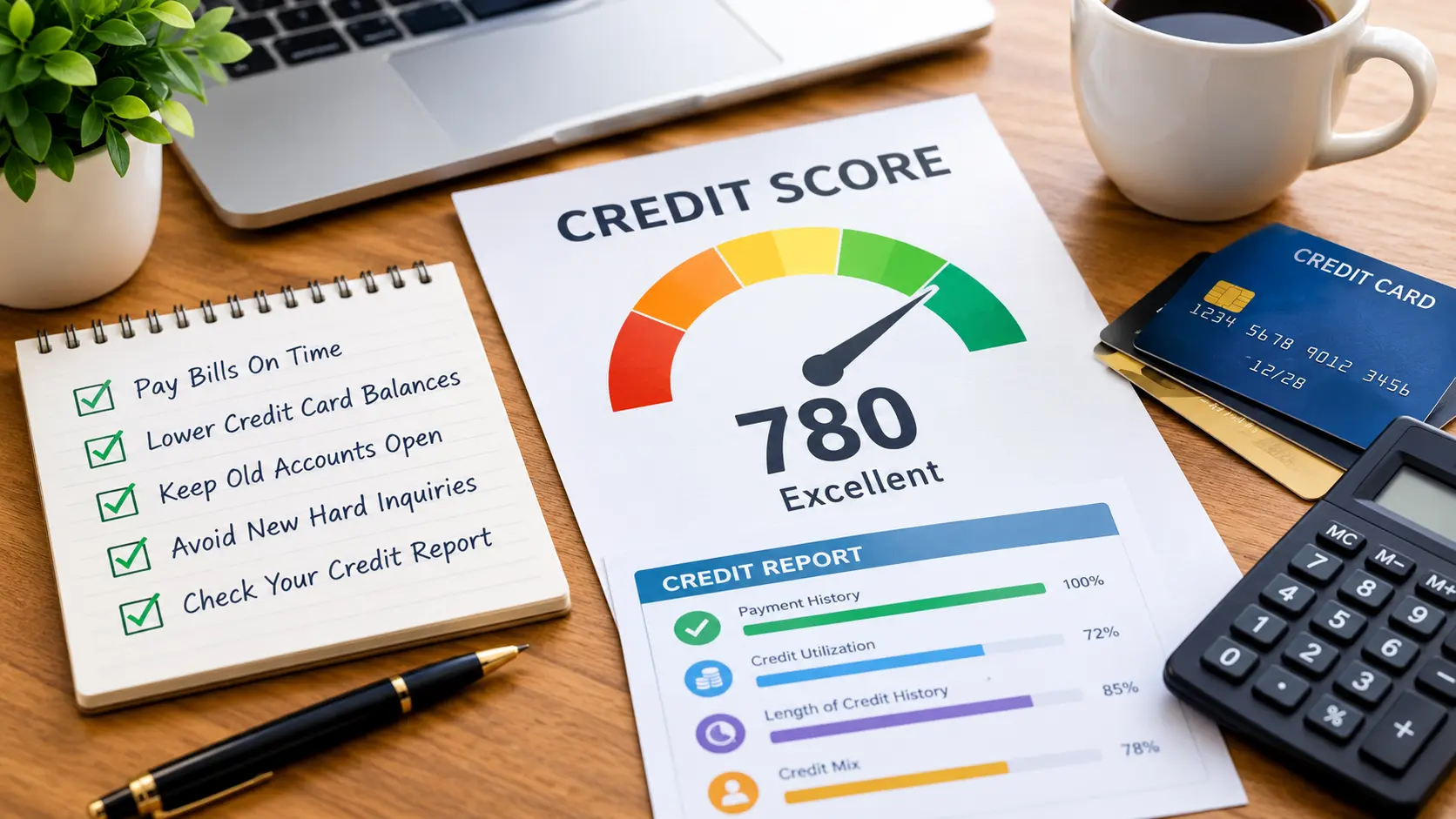

| Quick Answer You can improve your credit score fast by paying every bill on time, keeping your credit card balances low, fixing errors on your credit report, and asking for a higher credit limit. Most people notice a real change within one to three months, though a full turnaround can take longer if your credit history has bigger problems. |
Learning how to improve your credit score fast is essential when you want to rent an apartment, buy a car, or get better interest rates. Money worries have a way of creeping into everything, and a lot of that comes down to one three-digit number: your credit score. The good news? You do not need to be a finance expert to boost it.
What Is a Credit Score, Really?
Think of your credit score as your financial report card. Most commonly, your FICO score in the US ranges from 300 to 850. A score from 670 to 739 is a good score, a 740 to 799 score is a great score, and an 800+ score is an outstanding score. Your credit score is calculated by three credit bureaus: Experian, Equifax, and TransUnion. This means that you actually have three different credit scores
, which may vary depending on which bureau calculates it.
The Fastest Ways to Improve Your Credit Score
1. Pay Every Bill on Time, Every Time
This is the single biggest factor in your score. Payment history makes up a huge chunk of how your score is calculated, so even one missed payment can do real damage. Set up autopay for at least the minimum amount due on every card and loan. It costs nothing and removes the risk of forgetting.
2. Lower Your Credit Utilisation
Credit utilization is simply how much of your available credit you are using. If your card has a $2,000 limit and you are carrying an $1,800 balance, that is a problem, even if you pay on time. Try to keep your usage under 30 percent of your limit, and under 10 percent if you want to see results faster. Paying your balance down before the statement closing date, rather than just before the due date, can make a difference the next reporting cycle.
3. Check Your Credit Report for Errors
Mistakes on Credit Reports Can Happen More Often Than You Know
A mistaken late payment, an erroneous account, or even a balance that was paid off years ago can all affect your credit report. And if you can prove to the bureau that there’s an error on your report, you can raise your credit score dramatically within weeks. You’re entitled to a free report from each of the three bureaus, so there’s no reason not to check.
4. Ask for a Higher Credit Limit
If your payment history is solid, call your card provider and ask for a credit limit increase. This does not mean you should spend more. It simply lowers your utilisation percentage automatically, since the same balance now represents a smaller share of your available credit.
5. Become an Authorised User
If a family member has a credit card with a long history of on-time payments and low balances, ask if you can be added as an authorised user. Their good habits can reflect on your report too, giving your score a boost without you having to do anything else.
6. Pay Your Card More Than Once a Month
Instead of paying one big chunk of change one time before the due date, why not spread it out into two or three smaller payments? That way, the amount shown on your statement on the date that your card issuer reports to the credit bureaus (which is probably not the same day as your due date) will be lower
How Long Does It Actually Take?
There is not one particular answer since all things depend on your point of departure. Correcting an error on your report can raise your credit score within a few weeks. Reducing your credit utilization tends to show results in one billing cycle, that is, after about 30 days. If you are rebuilding your credit after delinquencies or charge-off, the time it takes to raise your credit score by a meaningful 100 points will be around six months to a year of responsible behavior.
Mistakes That Slow You Down
- Closing old credit cards, which shortens your credit history and can raise your utilisation percentage overnight
- Applying for several new credit cards or loans in a short space of time, which triggers multiple hard inquiries
- Only making the minimum payment month after month while the balance barely moves
- Ignoring your credit report and assuming everything on it is correct
Quick Recap
Improving your credit score fast is not about tricks or shortcuts. It comes down to a handful of habits done consistently: pay on time, keep balances low, check your report, and be patient with the process. Small, steady changes add up faster than most people expect.
Frequently Asked Questions
How fast can I raise my credit score?
Some changes, like fixing a report error or paying down a card balance, can show results within 30 days. A bigger improvement of 50 to 100 points usually takes several months of consistent good habits.
Does checking my own credit score lower it?
No. Checking your own score is called a soft inquiry and has no effect on your credit. Only hard inquiries, which happen when you apply for new credit, can cause a small, temporary dip.
What credit score do I need to buy a house or a car?
Most lenders look for a score of 620 or higher for a mortgage and around 660 or higher for the best car loan rates, though options exist below these numbers at a higher cost.
Should I close a credit card I no longer use?
Generally, no. Keeping the account open, even with no balance, helps your credit history length and keeps your overall available credit higher, which supports a lower utilisation percentage.
Can paying rent help my credit score?
In some cases, yes. Certain rent-reporting services can add your on-time rent payments to your credit report, which may help build your history if you do not have many other accounts.
Helpful Resources
- Experian – Ways to Improve Credit – https://www.experian.com/blogs/ask-experian/ways-to-improve-credit/
- NerdWallet – How to Build Your Credit Score Fast – https://nerdwallet.com/article/finance/raise-credit-score-fast
- Quicken – How to Improve Your Credit Score in 8 Steps – https://www.quicken.com/blog/?p=7500
- AnnualCreditReport.com – Free Official Credit Reports – https://www.annualcreditreport.com