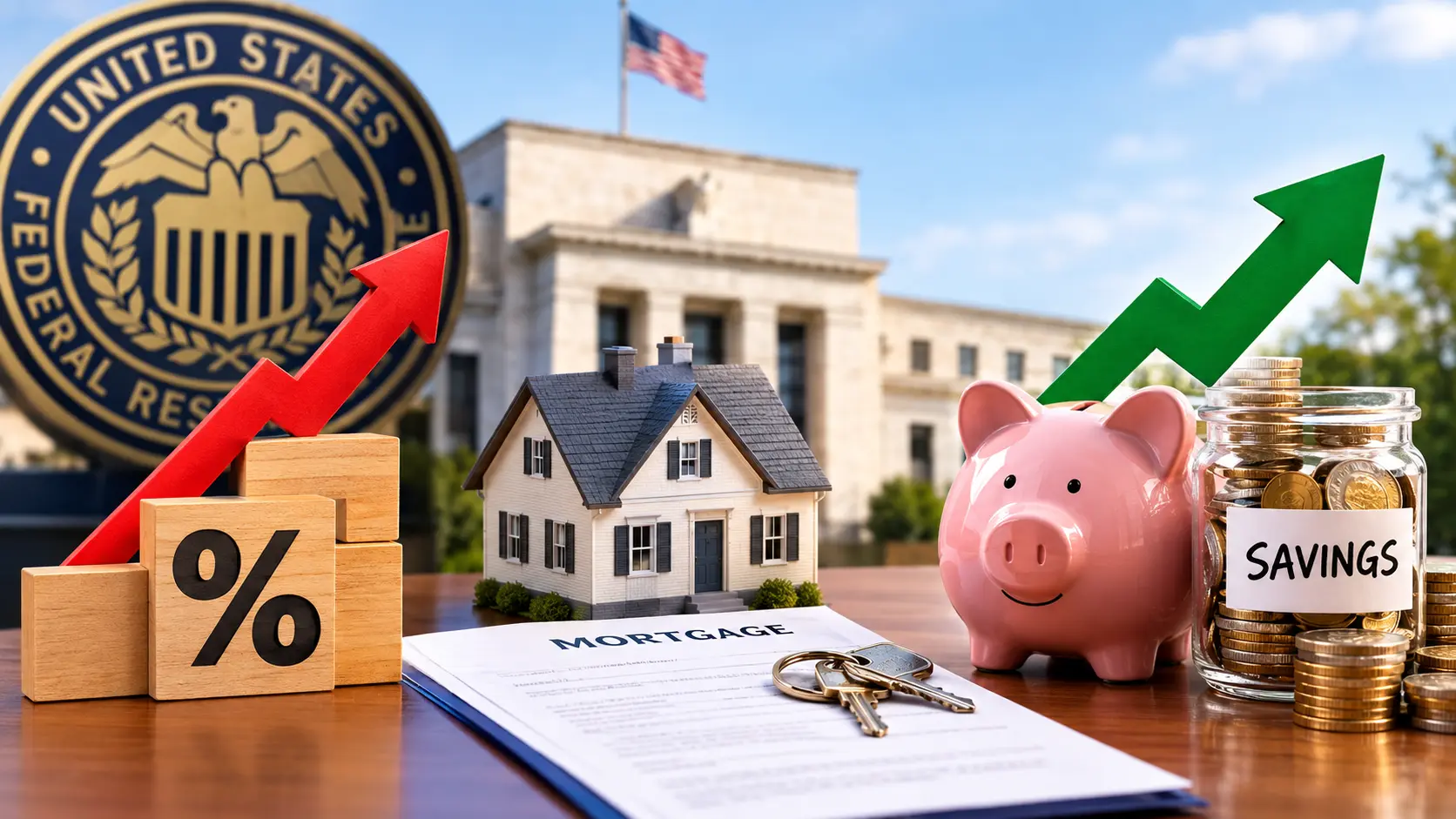

| Quick Answer Whenever the Federal Reserve hikes its discount rate, the mortgage rates tend to follow closely after, as US Treasury yields dictate the prices of loans. The rates for the savings accounts, on the other hand, are usually lower and slower to react to changes in the fed funds rate. In September 2026, for example, the Fed raised its rate by 0.25%, which increased the target range to 3.75%-4%. As a result, the average rate for 30-year mortgages is now 7%, and the best savings accounts offer up to 4.15% APR. |
Fed interest rates decisions directly impact everyday finances, from home borrowing costs to high-yield bank returns. Whenever the Federal Reserve hikes its discount rate, mortgage rates tend to follow closely after, as US Treasury yields dictate the prices of loans.
What Did the Fed Just Do?
On 16 September 2026, the Federal Reserve raised its key interest rate by a quarter point, hiking the federal funds target range from 3.50%-3.75% to 3.75%-4.00%, as detailed in the official Federal Reserve press release.The hike follows the first rate increases since July 2023 and was approved unanimously among the twelve voting members. The Federal Reserve stated that inflation remains above the desired levels and that higher rates would accelerate the process of bringing it down to the desired level of 2%.
The jump in the interest rate on September 16, 2026, was not the reason for the markets’ reaction. Everyone expected another increase after the consecutive hikes in July and September. The reason for concern was the accompanying “dot plot”, which projected the implicit outlook for future rates. Most members of the Fed expect another increase in the interest rate in 2026, while rates in 2027 are expected to remain near 4.1%. This means that there is a high likelihood that the hike in September would not be the last one.
How Does the Fed Rate Actually Affect You?
The federal funds rate is an interest rate that commercial banks charge each other for short-term (overnight) loans. You can’t take a loan at the federal funds rate, but it touches all other rates: credit cards, car loans, business loans, deposits, mortgages: everything has them.
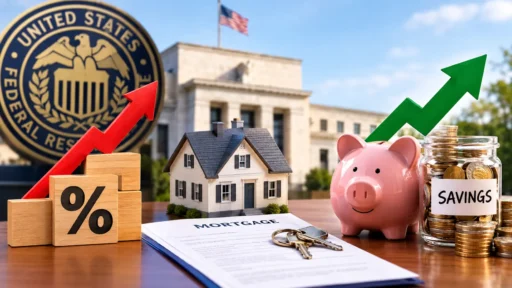
The simplest way to put it is, when the federal rate goes up, borrowing money becomes more expensive and saving money becomes more rewarding. The reverse is true when the rate decreases, albeit with a certain delay.
What Happens to Mortgage Rates?
The Mortgage Lending Market Is Slow In Reaction To The Fed’s Actions
Although mortgage rates are not directly determined by the federal funds rate, they tend to be driven by the 10-year Treasury yield, which in turn reacts to anticipated Federal Reserve policy changes and inflation data. Nevertheless, the impact is evident in 2026. As of 14 September 2026, the average 30-year fixed mortgage rate was at 6.91% compared to 6.35% at the same time last year. The 15-year fixed rate averaged at 6.37%. Housing economists are even suggesting rates would climb beyond 7% before winter sets in.
To put it into perspective, the difference could be worth up to $400,000 loan, moving from 6.35% to 6.91% adds roughly $150 on a monthly basis for many borrowers. I believe it is a good time for those who have been pre-approved to buy a home to lock rates before they climb further this year.
Quick Comparison: Before vs After the Fed Hike
| Product | Before Sept 2026 hike | After Sept 2026 hike |
| Fed funds rate | 3.50%–3.75% | 3.75%–4.00% |
| 30-year fixed mortgage | ~6.66%–6.76% (early Sept) | ~6.91% and climbing |
| High-yield savings (top rate) | Up to 4.10% APY | Up to 4.15% APY |
| National average savings rate | Around 0.38% APY | Little changed so far |
What Happens to Savings Accounts?
Now we are talking about your friend. Banks are competing for deposits, so when the Fed raises rates, online banks in particular sweeten their savings APYs to attract deposits. As of mid-September 2026, high yield savings accounts paid up to 4.15% APY, while traditional branches were right around 0%. The national average savings rate has been hovering around 0.38% APY.
This is the opportunity, and an opportunity most people overlook. You spend $10,000 balance, the difference between 0.38% and 4.15% works out to roughly $377 a year to move your cash around, with no risk, extra work or anything. Just call your bank and a transfer takes about ten minutes.
Certificates of deposit tend to follow similar trends, though banks will sometimes offer slightly lower long term CD rates if they expect to cut rates in the future. Compare both accounts before tying up money for a year or more.
Should You Wait for Rates to Drop?
Timing the Fed is a mug’s game, even for professional traders. Waiting on a future cut means gambling against a Fed that’s currently signalling more hikes, not fewer. If you’re a saver, there’s no waiting required — a better APY is available today.
If You’re Borrowing
- Get quotes from at least three lenders — rates can vary by 0.25% or more for the same borrower
- Ask about a rate lock, especially if you’re mid-purchase
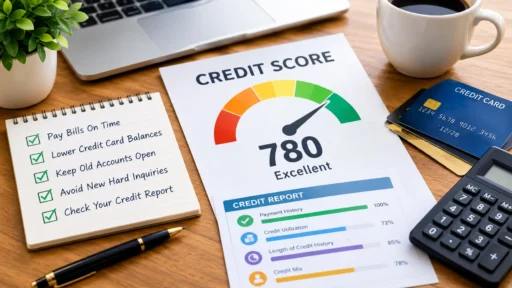
- Improve your credit score before applying; even small gains cut your rate
- Reconsider adjustable-rate mortgages carefully — they’re riskier in a rising-rate environment
If You’re Saving
- Compare online high-yield accounts against your current bank
- Consider a CD ladder to balance today’s high rates with future flexibility
- Avoid leaving large sums in a standard checking or savings account earning near-zero interest
Frequently Asked Questions
Did the Fed raise interest rates in 2026?
Yes. On 16 September 2026, the Federal Reserve raised its benchmark rate by 0.25 percentage points, moving the target range from 3.50%–3.75% to 3.75%–4.00%. It was the first hike since July 2023.
Will mortgage rates keep going up?
Mortgage rates track Treasury yields and inflation expectations rather than the Fed rate directly, but with the Fed signalling further hikes are likely, many housing economists expect the 30-year fixed rate to stay near or above 7% into the winter months.
Do savings account rates go up when the Fed raises rates?
Usually, yes, especially at online banks that compete aggressively for deposits. Traditional banks are often slower to raise their rates, which is why the gap between the best accounts and the national average tends to widen after a Fed hike.
Is now a good time to buy a house?
That depends on your personal finances more than the headlines. If you can comfortably afford payments at today’s rate and plan to stay put for several years, waiting for a rate drop that isn’t guaranteed rarely pays off. Refinancing later is always an option if rates do fall.
What’s a good savings account APY right now?
As of September 2026, the top high-yield savings accounts pay around 4.00% to 4.15% APY. Anything under 1% is well below what’s currently available and worth moving away from.
How often does the Fed meet to decide on interest rates?
The Federal Open Market Committee meets eight times a year. The next scheduled meeting after September 2026 is set for late October/early November, where markets will be watching closely for signs of another hike.
The Bottom Line
Higher rates at the Federal Reserve make loans more costly and deposits more profitable. These two factors sum up all the consequences of the fed rate decision in one sentence. So, if you are planning to take a mortgage, compare the rates and try to fix your rate before it climbs. If you have some savings that yield nearly nothing, move the money to a high-yield savings account; it is one of the simplest and most effective ways to make your money work for you.