
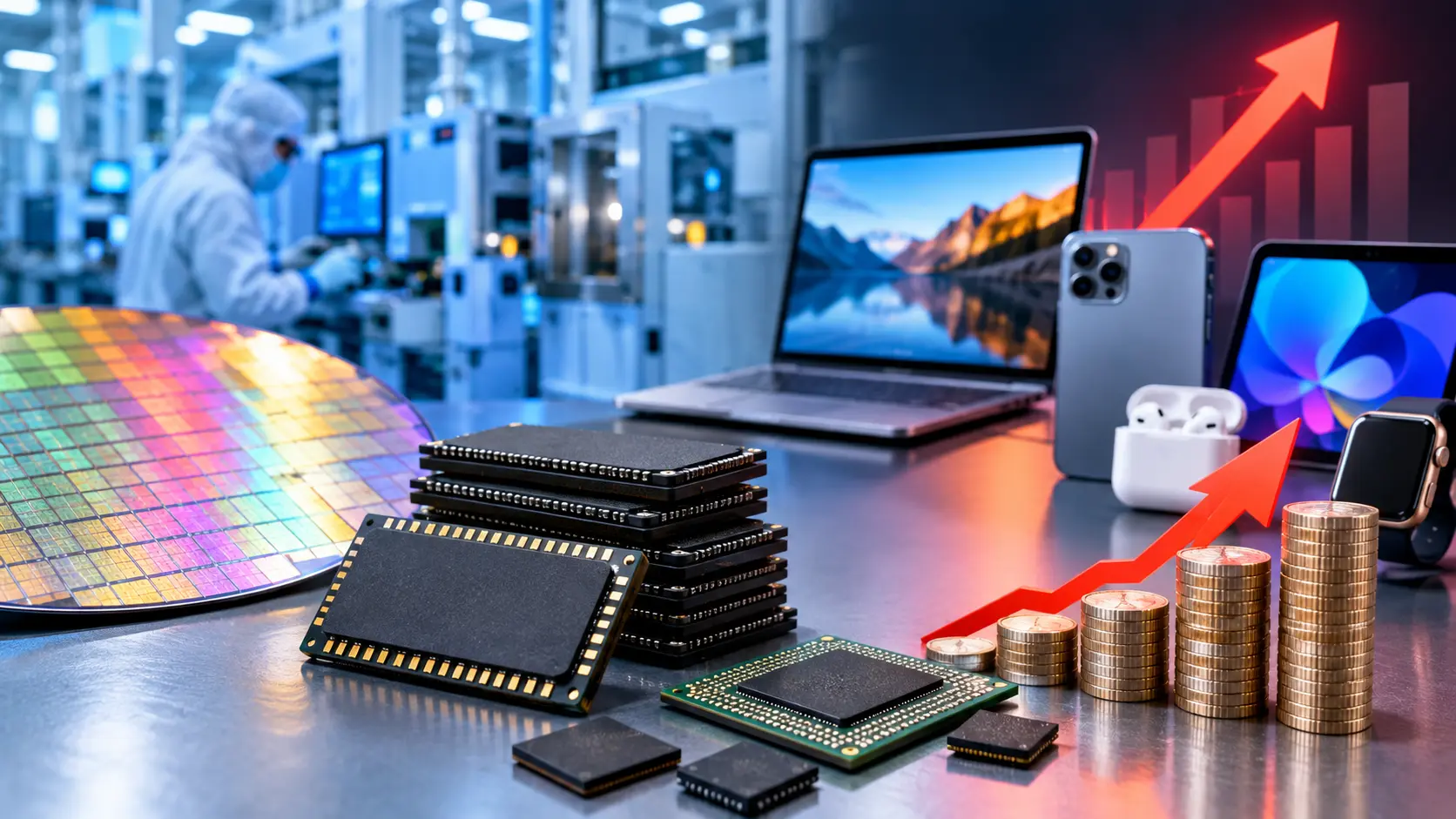

| Quick Answer Memory chip shortages are pushing technology prices up in 2026 because AI data centres are buying up most of the world’s DRAM and NAND memory chips, leaving far less for laptops, phones and everyday gadgets. Contract prices for these chips have jumped by 55–75% in a single quarter, and manufacturers are passing that cost straight on to shoppers. |
The Memory Chip Shortage 2026 is the primary reason tech prices are rising fast this year. If you’ve priced up a new laptop or a memory card recently and thought “that’s gone up a lot,” you’re not imagining it
What Are Memory Chips, and Why Do They Matter?
Every phone, laptop, games console and smart device contains two types of memory chip. DRAM is the short term memory which allows your device to run multiple tasks at the same time. NAND is the long term memory that stores your photos, apps and general files. Not having enough of either can cause prices to rise and stocks to run low, which is what is currently happening.
The Real Reason: AI Is Eating the World’s Memory Supply
The reason the majority of people do not realize is that this shortage of memory is driven by Artificial Intelligence (AI). The big tech firms, including Microsoft, Google, Meta, and Amazon, which house large AI data centers, need a particular graphics chip referred to as High-Bandwidth Memory or HBM.
The HBM utilization poses a problem because chips are produced in the same factories that make standard DRAM for personal computers. Moreover, HBM utilizes three times more production capacity than standard memory. This implies that every time a factory starts producing HBMs for AI servers, it reduces the production of standard memory. And given that HBMs offer much higher profits, the companies currently cutting on standard memory production will continue prioritizing the former over the latter.
Samsung, SK Hynix, and Micron account for over 95% of DRAM production globally. Therefore, the combined shift towards AI by the three firms could disrupt the world economy.
How Bad Are the Price Rises, Really?
Quite frankly, it’s been terrible, according to industry data. Research firm TrendForce reported that mainstream DRAM contract prices jumped 58-63 percent per quarter in early 2026, while NAND flash prices jumped 70-75 percent during the same period, the steepest increases in more than a decade. Some spot market prices for certain DRAM products were up four times their late-2025 levels.
That’s a big chunk of the cost of the phone in your hand. Memory chips can account for 10 to 20 percent of the bill for a typical smartphone, and those costs are getting passed on to you at the register.
Which Products Are Affected?
Almost anything with a memory chip inside. That includes:
- Laptops and desktop computers
- Smartphones and tablets
- External hard drives and SSDs
- USB sticks and memory cards
- Games consoles
- Smart TVs and other connected devices
Even car manufacturers have flagged rising memory chip costs as a factor squeezing their margins, showing just how far this shortage reaches beyond typical gadgets.
Is This Just a Temporary Blip?
Unfortunately, probably not. The experts call this shortage “structural” (as opposed to a temporary hiccup caused by imbalances in supply and demand), which means that it is related to a long-term change in the way manufacturers are using their capacity. This change is permanent and will alter trends in the industry. Industry research company IDC expects memory supply to grow more slowly than usual throughout 2026, and some executives, including the CEO of SK Hynix, predict that shortages could persist well beyond 2030. So, in short, do not expect prices to fall back to where they were in 2024 for some time to come.
What Can You Actually Do About It?
You can’t fix a global supply chain, but you can make smarter choices as a shopper.
- Buy sooner rather than later if you need a new laptop or phone — prices are more likely to rise than fall this year.
- Choose devices with expandable storage where possible, so you’re not locked into paying premium prices for built-in memory.
- Compare refurbished or last-year’s models, which were often built before the sharpest price rises hit.
- Avoid unnecessary upgrades to storage tiers you don’t really need, since extra memory now carries a much bigger price tag than it used to.
The Bottom Line
The root cause of the memory chip shortage in 2026 can be summarized in one phrase: artificial intelligence requires a prohibitive amount of memory, and there is not enough capacity to satisfy both AI data centers and ordinary consumer electronics, so until the industrial base is expanded (which takes several years), prices for technology products will remain at record levels.
Frequently Asked Questions
Why is RAM so expensive right now?
RAM (DRAM) is expensive because chipmakers are redirecting factory capacity towards high-bandwidth memory for AI data centres, leaving far less conventional memory available for everyday computers and laptops.
Will memory chip prices go back down?
Most analysts don’t expect a quick return to lower prices. Some industry forecasts suggest tight supply could last until 2027 or later, since the shortage is driven by a long-term shift in manufacturing priorities, not a short-term glitch.
Does the memory shortage affect phone prices too?
Yes. Memory chips can account for 10–20% of a smartphone’s build cost, so rising DRAM and NAND prices are a direct factor in higher smartphone prices, especially for mid-range models.
Is this the same as the 2021 chip shortage?
No. The 2021 shortage was mainly caused by pandemic disruption and a sudden spike in demand. The 2026 shortage is described as structural, caused by manufacturers permanently shifting capacity towards AI memory chips.
Should I buy a laptop now or wait?
If you need a new device soon, buying sooner is generally the safer option, since most forecasts point to prices rising further rather than falling in the near term.