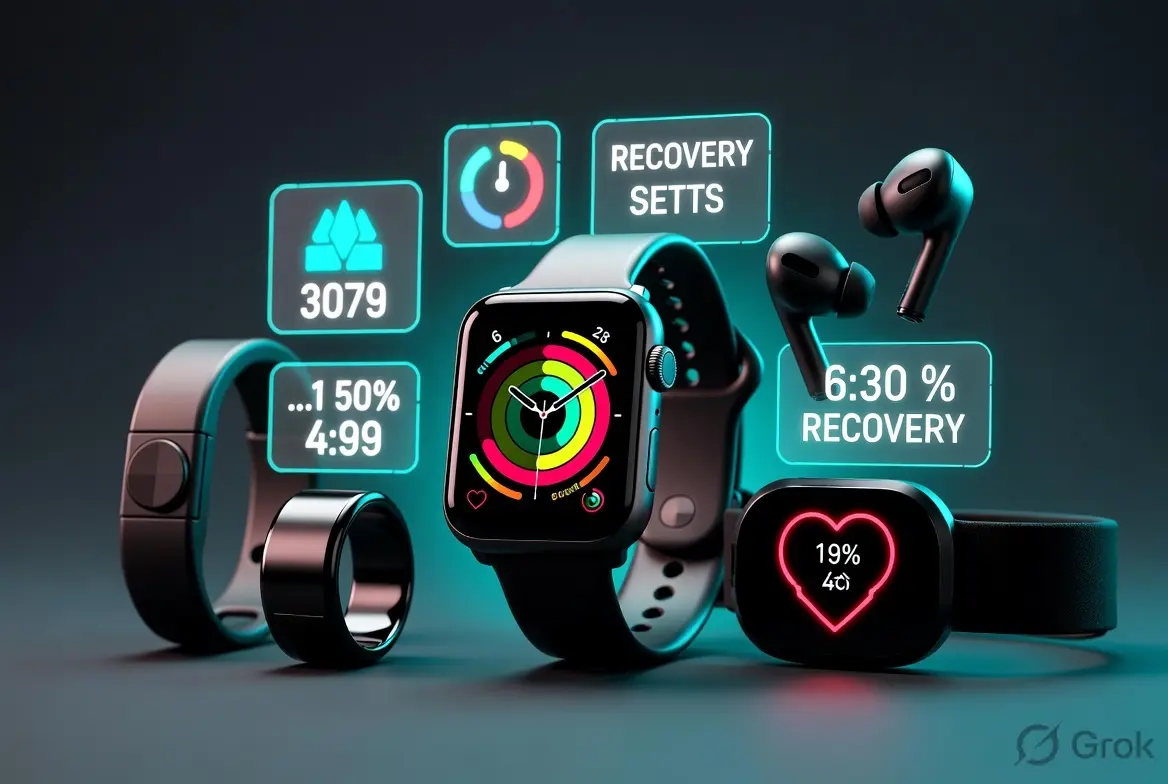

Finding the best wearable health tech devices can completely change how you manage your daily fitness, sleep, and overall wellness. Today’s smart trackers and watches do far more than just count steps—they deliver real-time insights into your heart rate, stress levels, and daily recovery so you can make smarter decisions for your body every day.
Your body is constantly telling you things throughout the day. How well you slept the night before, how tired your legs feel, and if that workout you did was all it took to make you feel energized are just a few of the things it tells you. Most of the time, we don’t listen to the subtle things our bodies tell us. A good wearable device can pick up on those things we usually overlook. The best wearable health technology does that by making activities such as walking, sleeping, and working out into easy to read numbers that actually give us the information we want.
You don’t have to be a high level athlete to see the value in these devices. Anybody who walks up the stairs, takes their dog out for a walk, and wants to get a good nights sleep can benefit from having a device on their person that is silently tracking things for you.
What to Look for in the Best Wearable Health Tech Devices?
Before buying the described product, it is necessary to determine the user’s needs and consider which features are desirable. A decent wearable device should have basic functions related to activity tracking, sleep, and recovery.
Activity tracking involves counting steps, working out, and measuring the pulse. As for sleep, devices monitor it to observe stages of sleep, such as light and deep sleep. Finally, the last important function is the one related to recovery. This feature is the most prominent since it allows the user to see whether it is advisable to work out or do some sport. By checking heart rate, pulse, and other indicators, the device tracks the recovery rate and determines if the user is fit enough to go training. Some of the described products also allow taking the level of oxygen in the blood, skin temperature, and heart rate into account. However, the set of functions may vary depending on the particular device; hence it is important to choose the one that matches the individual needs of the user.
Best Wearables for Everyday Activity Tracking
Apple Watch Series 11 (Best for iPhone Users)
If you already have an iPhone, consider buying an Apple Watch. It offers many great features such as tracking your step count, exercising, heart rate, and oxygen saturation. It can even perform an ECG from the convenience of your wrist. It also handles phone calls, text messages, and apps that let you do much more than your phone can. The downside to this product is the battery life; you will most likely have to charge it every day
When comparing the best wearable health tech devices for daily activity,performance and comfort are key factors to consider.
Garmin Venu 3 (Best All-Rounder)
The Venu 3 is another high-end fitness watch from Garmin, and its accuracy in recording information is what gives it an advantage over some of the competition. If you want to track your workout data without relying on your phone, this is one of the best options out there. Body Battery is a very handy tool that effectively summarizes your current state in one number that tells you how much energy you have for the day.
Fitbit Charge 6 (Best Simple Tracker)
Not all want a full-featured smartwatch on their wrists. Fitbit Charge 6 offers a minimal set of health-centric tracking functionalities: step count, heart rate and sleep monitoring, and an ECG sensor, all neatly packed in a convenient wristband. Its ability to work seamlessly with Google products such as Maps and Wallet adds to the appeal, making it a great choice for those who want to leave the complex world of smartwatch UIs to other gadgets.
Best Wearables for Sleep and Recovery
Oura Ring 4 (Best for Sleep Tracking)
The Ouraring does not display any information on a screen, but rather is worn on the finger, making it somewhat less imposing than a device on the wrist. The Ouraring tracks deeper sleep, body temperature, and heart rate to calculate a daily readiness score. In my opinion, the Ouraring is ideal for people looking to track their sleep.
WHOOP 5.0 (Best for Serious Training)
WHOOP is built for people who train hard and want to know exactly how much strain their body can handle. It has no screen at all — everything lives in the app. It tracks strain, recovery, and sleep around the clock, and it’s especially popular with runners, lifters, and endurance athletes who want to avoid overtraining. It does require a monthly subscription, which is worth knowing before you buy.
Budget-Friendly Options That Still Get the Job Done
It would be wrong to say that the Xiaomi Smart Band 9 and Amazfit Band 7 are not worth a penny. They can do almost everything that more expensive smartbands are capable of: count calories, measure heart rates and sleep quality, monitor the level of physical activity. However, they cannot be called premium devices as their battery life often lasts for up to a week and they lack some of the advanced technologies that the higher-end smartbands offer.
How to Pick the Right One for You
Choosing from the best wearable health tech devices depends entirely on your daily routine and fitness goals. Forget about features for a second and answer these questions first: do you primarily want information about steps, sleep, or recovery?
A trainer’s answer to the last one would be, don’t waste money on fancy recovery coaching devices if all you want is your step count. Get something that reflects the life you’re living, not the life that you want to be living.
A Few Simple Tips Once You Start Wearing One
- Wear it consistently — a tracker only works if it has enough data to compare day to day.
- Check trends, not single days. One bad sleep score doesn’t mean much on its own.
- Use recovery scores as a guide, not a rulebook. Your body still knows more than any algorithm.
- Charge it on a routine, like plugging it in while you shower, so it never dies at the wrong time.
Frequently Asked Questions
Do I need a subscription for these devices to work?
Some of the best wearable health tech devices require a monthly subscription for full data access, such as WHOOP. However, devices like Apple Watch, Garmin, and Fitbit work without one, though Fitbit’s more advanced insights sit behind a premium plan.
Are smart rings as accurate as smartwatches?
For sleep and recovery tracking, smart rings like the Oura Ring are often just as accurate as watches, sometimes more comfortable, since fingers move less than wrists during sleep.
Final Thoughts
Finding the best wearable health tech devices comes down to choosing something you are actually willing to wear every day. You should always focus on what matters to you most, like sleep tracking, workout tracking, or recovery monitoring.