


Quick answer: Yes, for most people. An AI Black Friday deal finder checks more stores, more often, than you ever could by hand. But it’s not perfect — you still need to double-check prices yourself before you buy, especially on big-ticket items.
What Is an AI Black Friday Deal Finder, Really?
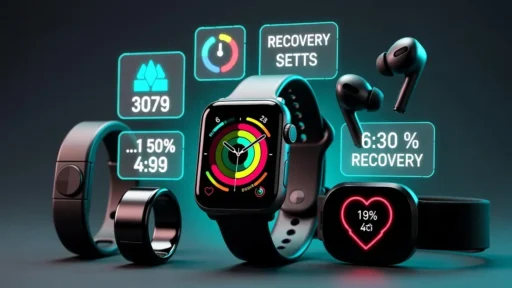
AI price comparison assistants help users save time on Black Friday deals. Rather than having to open multiple browser tabs to compare prices, these tools can do it in seconds.
This technology is already available. Google has multiple AI tools for Black Friday shopping. For example, the Universal Cart tracks price drops, Gemini helps users find gift ideas, and Google Lens helps users compare in-store. Users can now enter natural language queries to receive tailored gift suggestions based on their query (for example “useful gifts under $40 for an uncle who loves running”). The results will include customer reviews, images and stock availability.
Retailers are also making changes to improve shopping experiences. Target have stated that users can now complete their entire shopping journey within ChatGPT. In addition to this, new shopping agents have been developed. Deal.ai is an example of this. It automatically compares prices across thousands of stores. It can compare 24,394 identical products across 16 major retailers in the USA. This is a task that would be impossible for a human to do in the morning.
Current AI Shopping Interest: Why 2026 Is Different
People are increasingly using generative AI to find the best deals. Industry experts say that more people than ever are starting their gift shopping journey using generative AI tools.
This is changing the way products are discovered. Whereas a few years ago you may have opened up multiple sites (Amazon, Walmart and Target) to compare prices, you can now use AI shopping assistance to do this and highlight the best deal for you.
AI vs Manual Shopping: A Practical Comparison Guide
Here’s a simple, honest look at where each method wins.
| Task | AI Shopping Assistant | Manual Shopping |
| Checking many stores at once | Fast, does it in seconds | Slow, tab after tab |
| Spotting a fake “was” price | Can pull price history automatically | You’d need to remember or guess |
| Personalised gift ideas | Good — can describe a person in plain words | Takes longer, relies on your own memory |
| Reading small print (returns, warranty) | Still worth doing yourself | You’re already reading the page anyway |
| Gut-check on whether you actually want it | Not its strong point | This one’s on you |
The honest answer? Use both. Let the AI shopping assistant do the heavy lifting of comparing prices across stores, then use your own judgement for the final decision.
How to Compare Black Friday Prices the Smart Way
Whether you use an AI Black Friday deal finder or go it alone, the method is the same:
- Note the exact model number. Retailers sometimes sell a slightly cheaper “Black Friday only” version of a product. Check it’s the same one you researched.
- Check at least two or three retailers. A tool does this automatically; manually, give yourself ten minutes per big purchase.
- Look at the price over the past few months, not just today. Google Shopping shows US shoppers whether a current price is high, low or typical compared with recent history.
- Read the return policy before you click buy. A cheap price with a strict no-returns rule isn’t always the better deal.
How to Verify a Real Black Friday Discount
Helpful
It can be difficult to spot these fake deals.
Approximately 40% of Black Friday deals are not genuine. This means that in the lead up to Black Friday, the original price of an item will be increased. For example, if a product is advertised as 50% off, it may only be 15% off the price of the item in October.
How to Spot These Deals
Websites like CamelCamelCamel (free) allow you to look at the full price history of products on Amazon. It will tell you the lowest price that the item was in the past 90 days, and 365 days. It also tells you if there has been a sudden increase in the price just before Black Friday. If you are shopping on Amazon, the price history of many items can be viewed using Amazon’s own shopping assistant. You can view up to 365 days of price history without having a Prime account.
Quick ans: How do I know if a Black Friday discount is real? Compare today’s price against the lowest price from the last 90 days. If it’s close to or above that figure, the “sale” isn’t much of a sale at all.
Quick ans: What’s the fastest way to check a Black Friday deal? Paste the product link into a free price-history tool, or ask an AI shopping assistant to pull up recent pricing — it takes under a minute either way.
Will AI Shopping Tools Still Be Useful After Black Friday?
The benefits of using an AI to help with shopping deals on Black Friday can be used throughout the year. Whether it is Christmas, January sales, Back to School or even random Tuesday sales, you can get the AI to track prices for you. Once you get into the habit of setting price alerts, or just asking your AI assistant if it is a good price, you are likely to make use of it throughout the year. This can encourage regular shopping habits.
The Honest Verdict
This is a very efficient way of finding Black Friday deals. The AI can search a greater variety of shops, and compare all the historical prices much faster. You also won’t get tired of comparing 5 different browser windows. However, it is far from perfect, so the best way to use this tool is as research. Use your own common sense to decide whether to pay for that item.
Useful Resources
- CamelCamelCamel — free Amazon price history tracker — https://camelcamelcamel.com
- Google’s 2026 Black Friday shopping tools — Universal Cart, Gemini gift ideas, Google Lens — https://blog.google/products-and-platforms/products/shopping/black-friday-cyber-monday-shopping-tips-2026/
- Engadget: how to spot fake Black Friday tech deals — https://www.engadget.com/2304942/black-friday-fake-tech-deals-how-to-spot/