

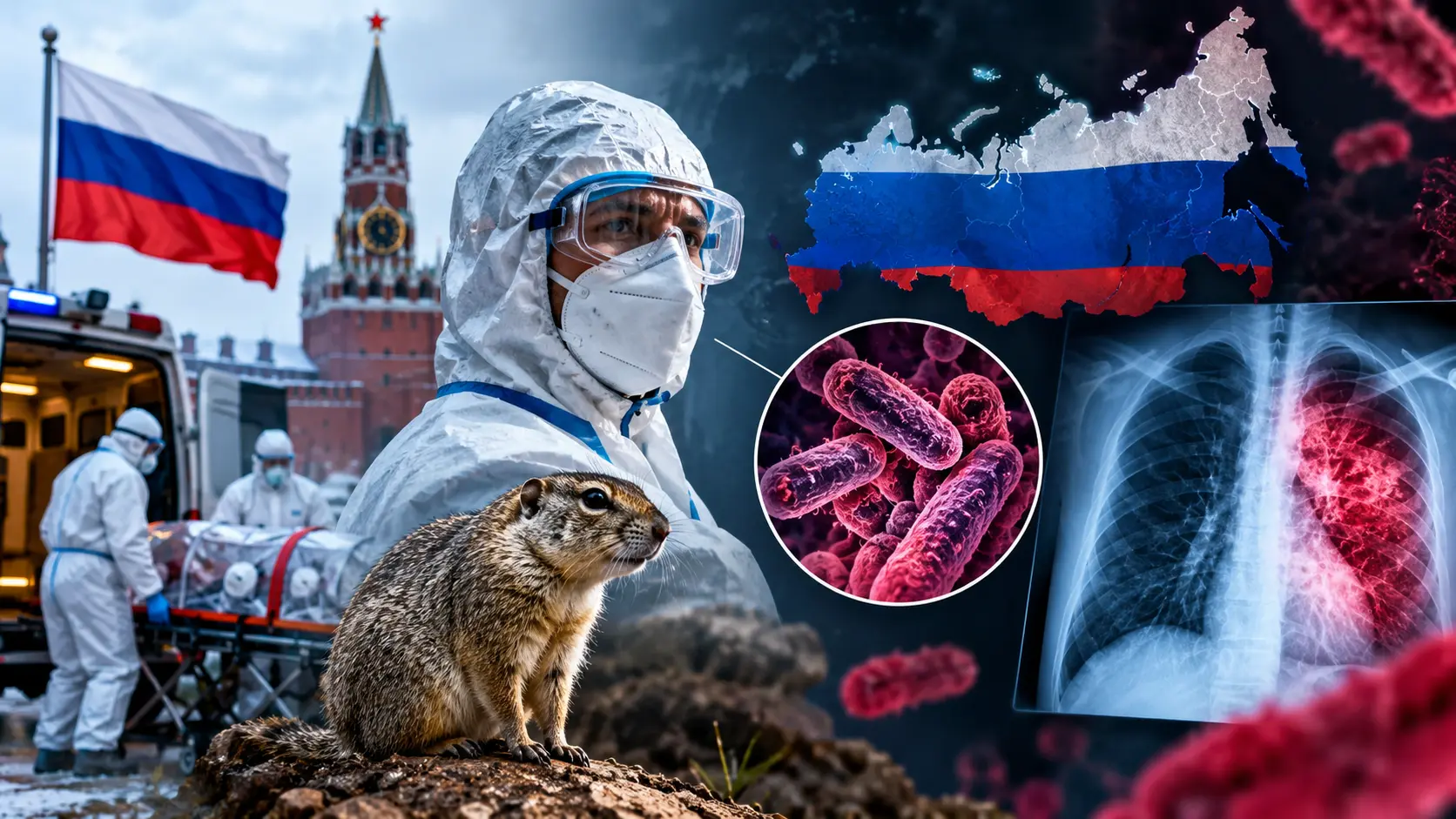

If you saw “plague” in the headlines this week, you probably did a double take. The Russia pneumonic plague outbreak is a suspected case, not a confirmed epidemic. Here’s what we know so far, what we don’t, and what it means for you in the U.S.
Quick Answer: Is There a Plague Outbreak in Russia?
Not confirmed. A 28-year-old lab worker in Russia’s Irkutsk region died, and officials are treating it as a possible pneumonic plague case. Russia’s health agency says the worker was diagnosed with “pneumonia of unknown aetiology” and that the situation in Irkutsk and Shelekhov is “stable.” So far, there is no proof the illness has spread to the public.
What Happened in Irkutsk, Russia?
The woman was employed at the Irkutsk Anti-Plague Research Institute in Siberia. There are reports that she passed away two days following her hospitalization.
According to the local news outlet, Lyudi Baikala, she may have been infected on September 25th. The article states that she possibly broke a test-tube with plague bacteria in it at work. This has not been confirmed by any of the Russian authorities, and there are many reports stemming from Russian news outlets that this might not be an actual case of pneumonic plague.
How Many People Were Quarantined?
According to local news, up to 189 people are in isolation for medical observation. People who have been in contact with the patient are under observation as well, and they do not show any signs of the disease. Several hospitals have been closed for quarantine, as reported by social media and local newspapers.
What Has Russia Said?
Russian officials have been careful with their words. The health agency downplayed any link to her work, saying no germs tied to her job were found in her samples. It also says measures are in place in response to the case.
What Is Pneumonic Plague?
Pneumonic plague is a lung infection caused by the same bacteria (Yersinia pestis) behind the Black Death. It’s the most serious form of plague, and the CDC says so too.
How Is It Different From Bubonic Plague?
Bubonic plague usually comes from flea bites and causes swollen lymph nodes. If untreated, the bacteria can reach the blood or lungs. Pneumonic plague hits the lungs and can spread person to person through coughing. That’s why health officials take it seriously.
What Are the Symptoms?
Think of a really bad flu that hits fast. Common signs include:
- Sudden high fever and chills
- Headache and body aches
- Weakness and nausea
- Cough, chest pain, and trouble breathing in the pneumonic form
Symptoms usually show up one to eight days after exposure. For pneumonic plague, it can be as short as one day.
Can Plague Spread From Person to Person?
Yes, the pneumonic form can, through respiratory droplets from someone who is coughing. But so far, there’s no evidence of person-to-person spread in this case, even if it is plague.
It’s also very different from COVID-19. One microbiology professor told reporters it’s important to remember pneumonic plague is a very different disease from the virus behind the pandemic. It needs close contact, and we have antibiotics that work.
Is Plague Treatable?
Yes. When given early, antibiotics work well against all forms of plague. The catch is timing. Treatment has to start early, and untreated pneumonic plague is extremely dangerous. One Tulane microbiologist says it has a nearly 100% fatality rate without treatment.
Should Americans Be Worried?
For now, the risk to people in the U.S. looks very low. Here’s what the government has said:
- The State Department says it’s monitoring closely with the CDC and other agencies.
- Secretary of State Marco Rubio said the situation has not “caused an alarm.”
- Officials haven’t pointed to a wider public health threat.
- Travel between the U.S. and Russia is limited right now.
Also, plague isn’t new here. The CDC estimates about seven human plague cases a year in the U.S., mostly in rural parts of the West, like northern New Mexico, northern Arizona and southern Colorado. Those cases come from animals and fleas, not from Russia.
How to Stay Safe and Informed
You don’t need to change your daily routine. A few smart habits help:
- Stick to trusted sources. Check the CDC and WHO for updates, not viral posts.
- Skip the panic posts. Some social media claims are unverified.
- Use bug spray outdoors. The CDC recommends DEET when hiking or camping to keep fleas away.
- Call a doctor if you’re sick after travel. Mention where you’ve been.
Helpful Resources
- CDC: About Plague
- WHO: Plague Fact Sheet
- Axios: Russia’s plague mystery
- CNBC: What we know about the suspected case
- RFE/RL: Siberian institute staff isolated
Frequently Asked Questions (FAQ)
Is the Russia pneumonic plague outbreak confirmed?
No. Russian officials haven’t publicly named plague. They’ve only said the worker had pneumonia of unknown cause, while investigations continue.
What is pneumonic plague?
It’s a lung infection caused by Yersinia pestis. It’s the most serious form of plague and can spread through coughing.
Can pneumonic plague be cured?
Yes, if antibiotics start early. Delays make it far more dangerous.
Is there a plague risk in the United States?
The risk from this case looks very low. U.S. officials are monitoring it, and the U.S. already sees a handful of plague cases yearly from animal exposure.
Is there a plague vaccine?
Not a strong one for the pneumonic form. Vaccines used elsewhere work against bubonic plague, but evidence is lacking for the pneumonic form.
The Bottom Line
The Russia pneumonic plague outbreak is a suspected, not confirmed, situation, and so far it appears limited to one death and a few hundred people under watch. Check the CDC for updates, and don’t believe every viral post.